Overview
The Kanchenjunga Base Camp Trek is one of the most famous trekking destinations for travelers who like to undertake off-the-beaten-trails trekking journeys in Nepal. The trail to the south base camp cuts straight to the heart of the Mt Kanchenjunga massif, climbing over vertiginous ridges and plunging into seemingly bottomless valleys. In the space of two weeks, you will cover more than 15,000m of altitude change, gaining a maximum elevation of 4800m, on a par with the summit of Mont Blanc.
The Kanchenjunga North & South Base Camp Trek always rewards those trekking its route, since the efforts are enormous. The trail passes through a remote Limbu village that sees few outsiders and climbs to the very foot of Kanchenjunga, for the kind of views normally reserved for mountaineers. However, you must carry a tent and food, and there are no escape routes if you get sick, tired, or bored. Above Toro tan, be alert for the symptoms of AMS.
Highlighting the Kanchenjunga Base Camp Trek
- Experience of walking over the glaciers.
- Pristine Rhododendron forest and the high alpine passes.
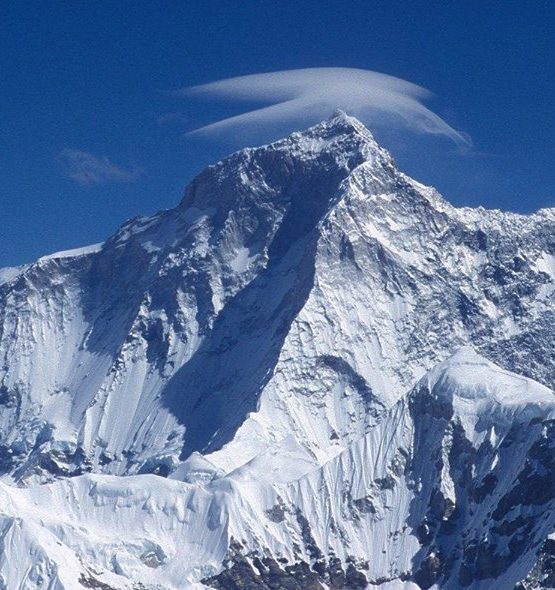
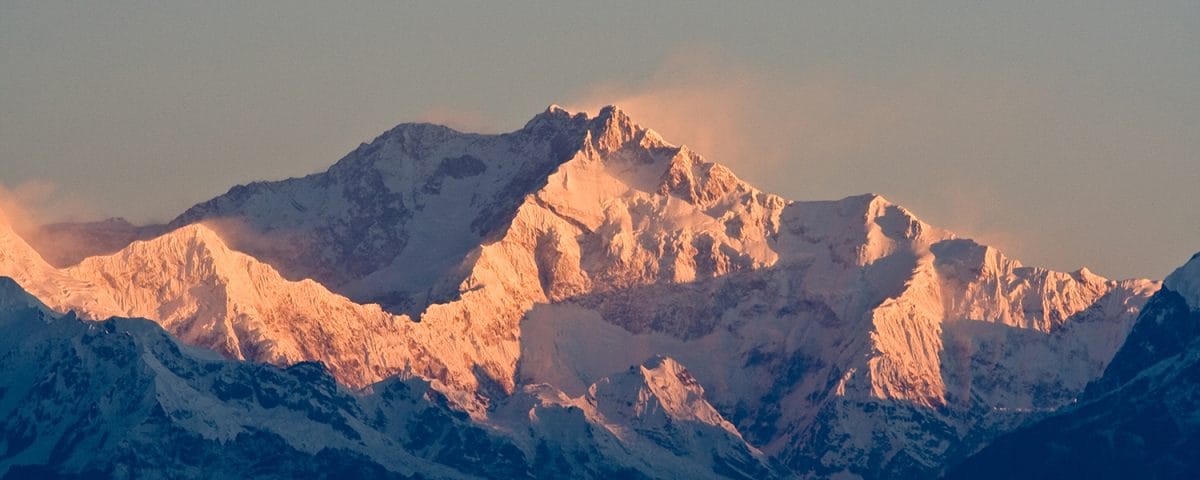
- Mount Kanchenjunga 8586 meters,
- The third-highest peak in the world
- The blend of traditional Nepali and Tibetan culture
- Wild, remote, and unspoiled nature, including amazing landscapes, forests, rivers, and waterfalls
- Exploring around the northern and southern base camps of Mt. Kanchenjunga
- Crossing several glaciers. Such as Kanchenjunga Glacier, Yalung Glacier, and many others
- Remote picturesque villages and the local ethnic groups, famously the Limbus.
- The Kanchenjunga Conservation Area has diverse wildlife such as Snow leopards, Musk deer, Red panda, etc.
Kanchenjunga Base Camp Trek Itinerary (North & South Routes)
Day 01: Arrival in Kathmandu and transfer to the hotel in Kathmandu, 1350m
Day 02: Flyout from Kathmandu- Bhadrapur and drive to Illam
Day 03: Illam to Taplejung – Sekatham drive via jeep
Day 04: Trek from Sekatham – Amjilosa
Day 05: Trek from Amjilosa -Gyabla
Day 06: Trek from Gybla to Ghunsa
Day 07: Rest or Acclimatization or Exploring day at Ghunsa
Day 08: Trek from Ghunsa – Khambachen
Day 09: Trek from Khambachen – Lonak
Day 10: Day hike to North B.C / Pang Pema and back to Lonak
Day 11: Trek from Lonak – Ghunsa
Day 12: Trek from Ghunsa – Selela
Day 13: Trek from Selela – Cheram via crossing Mirgin Pass
Day 14: Trek from Cheram – Ramche 4580m 4-5hrs
Day 15: Day hike to Oktang South B.C and back to Ramche
Day 16: Trek from Ramche – Tortang
Day 17: Trek from Tortang – Yamphudin
Day 18: Trek from Yamphudin – Mamankhe
Day 19: Trek from Mamankhe – Kande Bhanjyang
Day 20: Trek from Kande Bhanjyang – Lalikharka
Day 21: Trek from Lalikharka – Taplejung
Day 22: Trek from Taplejung – Dobhan
Day 23: Trek from Dobhan – Gorja
Day 24: Trek from Gorja – Gufa Pokhari
Day 25: Trek from Gufa Pokhari – Pokhari 3-4hrs and drive to Tumlingtar by jeep
Day 26: Flyout from Tumlingtar – Kathmandu and transfer to the hotel in Kathmandu
Day 27: Rest Day in Kathmandu
Day 28: Departure from your Next Destination
Are you ready for the Kanchenjunga Trek? Let’s check if you’ve the correct equipment
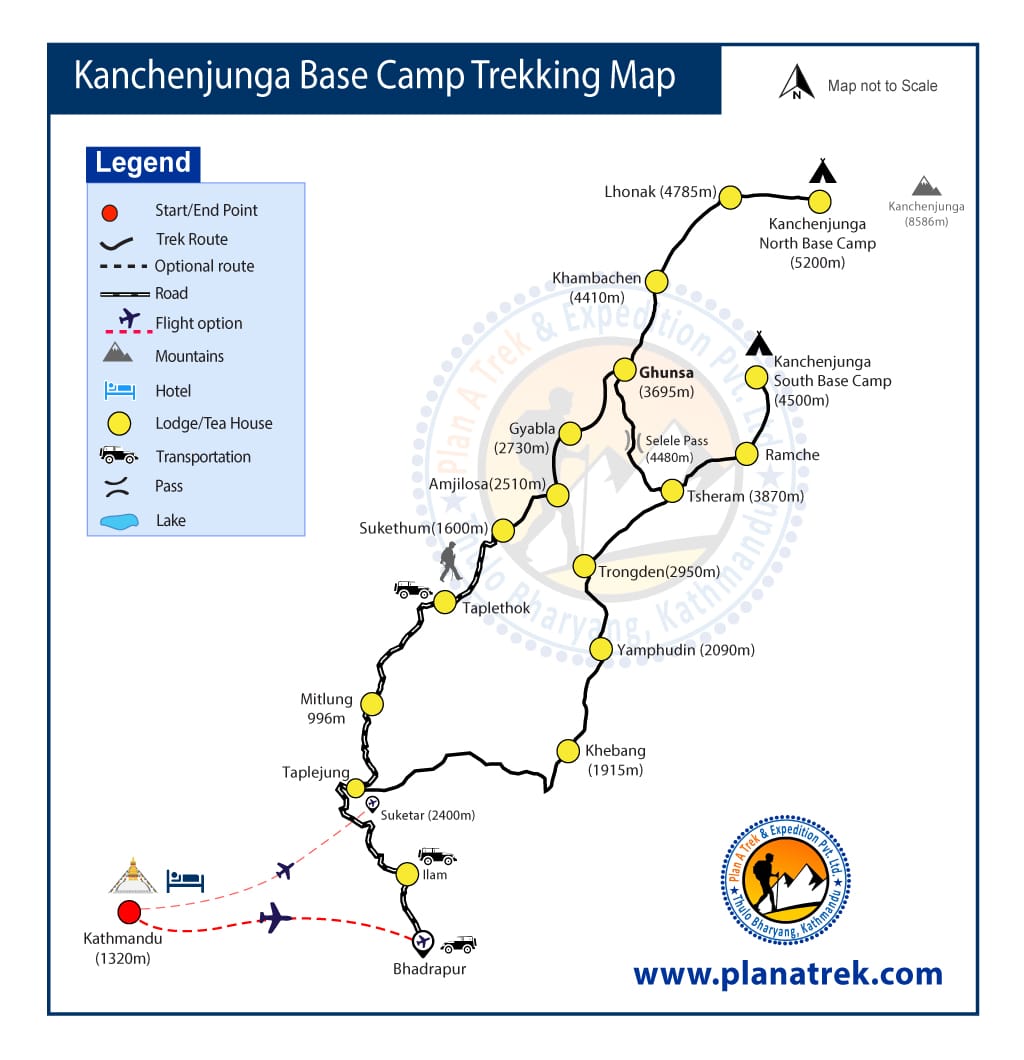
Kanchenjunga Base Camp Trekking Map – North & South Routes
Best Season For the Kanchenjunga Trek
Autumn (September, October, and November) and Spring (March, April, and May) are the best times for the Kanchenjunga trek. This is the perfect time for trekking, touring, and mountaineering in Nepal.
Kanchenjunga Weather & Trekking Conditions
The Weather in the Kanchenjunga region mostly remains stable and clear during these times. During the best time, there are fewer chances of rainfall, snow, or bad weather. The beautiful weather enhances beautiful and unobstructed views of the distant surrounding vistas. The temperature is also moderate, which is suitable for trekking.
Kanchenjunga Trek is possible at any time of the year.
However, Summer (June, July, and August) and Winter (December, January, and February) are less popular seasons to trek. Summer receives heavy monsoon rain in the Kanchenjunga region. Winter is colder with freezing temperatures at night.
How Difficult is the Kanchenjunga Base Camp Trek
- The Kanchenjunga trek is a high-altitude trek and possesses a higher risk of altitude sickness. You need to remember that you’ll trek up to an altitude of 5143 meters at the Kanchenjunga base camp.
- This trek covers large distances and time above 22 days. Trekking on an entirely isolated trekking trail far from modernity can be difficult. Some trekkers feel exhausted in the middle of the trek. Make sure you are physically fit or have trekking experience before you choose this trek.
- Trekkers must walk for 6 to 7 hours a day on average during the trek. Walking for such long hours over rugged and different terrain is difficult for beginners. Practice some exercises and strength training starting a month before you go.
Detailing the Kanchenjunga North & South Base Camp Trek
Day 01: Arrival in Kathmandu and transfer to the hotel in Kathmandu, 1350m
You will land in Kathmandu, where our company representative will be at the arrival gate, holding your name card and waiting for you to drive to the hotel in Kathmandu.
Day 02: Flyout from Kathmandu- Bhadrapur and drive to Illam ( Explore the tea garden) 3636m
The flight from Kathmandu to Bhadrapur takes 45 minutes, and driving in a private car/jeep takes 4 hrs to reach Ilam. Ilam is one of the famous tea gardens in the eastern region. Ilam’s tea and the tea garden are really famous all around the world.
Day 03: Illam to Taplejung – Sekatham drive via jeep 1780m 8-9hrs
On this day, we drive along a snake-like way through the hilly forest, where we will also spot a small market inside a small town.
Day 04: Trek from Sekatham – Amjilosa 2510m 6-7hrs
Today is the day of hiking through the Gousakhonda with its valley and high Himalayan forest. After walking for a long day, at the very end, we will have to hike a bit uphill where Amjilosa will be seen, and we will stay overnight at the small Sherpa settlement at Amjilosa.
Day 05: Trek from Amjilosa -Gyabla 2730m 6-7hrs
We will trek by the side of the river Mewa and through the jungle. Some teahouses can be found at Phale. Our main destination is Gyabla, which takes around 6 to 7 hrs to reach.
Day 06: Trek from Gybla to Ghunsa 3595m 5-6hrs
Following the narrow, snaky trail through the jungle, we walk through Phole village. This is a winter settlement for the people of Ghunsa. Here we will witness the only monastery of the whole trek, and your guide will take you on a tour of the monastery.
Day 07: Rest or Acclimatization or Exploring day at Ghunsa
Today, we will be visiting Ghunsa village and viewing the mountain ranges. These are considered the most memorable moments of the trek. We’ll also have an overnight stay at Ghunsa.
Day 08: Trek from Ghunsa – Khambachen 4089m 5-6hrs
We have to go through the jungle and the khola (river). It is a bit difficult to reach Khambachen, and it can be reached in around 5 to 6 hrs.
Day 09: Trek from Khambachen – Lonak 4785 4-5hrs
On this day, we find no tea houses on the trail. The trail goes uphill, narrow valley shore. We can see Kanchenjunga, Janu, Yalung Kang, etc. It takes around 4 to 5 hrs.
Day 10: Day hike to North B.C / Pang Pema and back to Lonak
It takes around 6 hours to reach Pang Pema/ North Base Camp and get back. Barren land. Overnight stay at Lonak.
Day 11: Trek from Lonak – Ghunsa 3595m 5-6hrs
Today, you will witness spectacular mountains and cliffs when we pass through the descent hike.
Day 12: Trek from Ghunsa – Selela 4290m 5-6hrs
The trail is uphill through the jungle. Rhododendron and pine can be found. The trail is ascending. It takes 5 to 6 hr to reach Selele la.
Day 13: Trek from Selele la – Cheram via crossing Mirgin Pass (4700m) 3870m 7-8hrs
Today, the trail goes through Crossing Mirgin pass (4700m). It is uphill, then descending. We can see the beauty of Makalu, Kanchanjunga, etc. It takes 7 to 8 hrs to reach Cheram.
Day 14: Trek from Cheram – Ramche 4580m 4-5hrs
A narrow valley, where we can see the mountain ranges. We can also see yaks, mountain goats, mountain blue sheep, musk deer, etc. It takes around 4 to 5 hrs to reach Ramche.
Day 15: Day hike to Oktang South B.C and back to Ramche
On this day, we do a hiking walk to Oktang South Base Camp. It takes around 2 hours to reach there and ½ hrs to get back to Ramche.
Day 16: Trek from Ramche – Tortang 2995 7-8hrs
Downhill straight jungle near the Indian border, Sikkim/Darjeeling. The trail goes downhill and is normal. It takes around 7 to 8 hrs to reach Tortang.
Day 17: Trek from Tortang – Yamphudin 2080m 7-8hrs
Our next destination is Yamphudin. We can see the jungle uphill up to Lashi danda, then downhill. Teahouse at Lashidanda. It takes 8 hrs to reach our destination, i.e., Yamphudin. It takes around 7 to 8 hrs to reach there.
Day 18: Trek from Yamphudin – Mamankhe 1785m 6-7hrs
Today you will hike through the Kabeli valley and the Kabali river on the side. The trail will lead you to the small Limbu settlement, where you may have the opportunity to explore the different ethnic cultures of Nepal.
Day 19: Trek from Mamankhe – Kande Bhanjyang 2129m 5-6hrs
You will hike through the untamed forest and pasture that allows a superb visit to the spectacular Kanchenjunga, Yalungkhang, and Ghabur Himal.
Day 20: Trek from Kande Bhanjyang – Lalikharka 2265m 5-6hrs
Today, the hike will be quite easy, and you will be seeing an amazing, stunning, picturesque panoramic view of snow-capped mountains, and experience the hard village life along the trek.
Day 21: Trek from Lalikharka – Taplejung 1820m 5-6hrs
Today, you will experience the civilization as you will be heading to Taplejung, which is the headquarters of the Taplejung district. We will spend the night there.
Day 22: Trek from Taplejung – Dobhan 645m 4-5hrs
Today you will be hiking downhill till you reach the Tamur River. The trail will lead you through hilly forest along the way, and you will spot a local people’s settlement before Dovan. Dovan is a small market town to the surrounding villages.
Day 23: Trek from Dobhan – Gorja 210m 4-5hrs
Today you will be hiking uphill again, exploring typical Nepali culture along the trek. There will be a phase of hiking, where you will be walking through the forest. This used to be the major trekking route towards the Kanchenjunga Base Camp, but now there is an alternative route that makes this route much special as the alternative route is being used for trekkers.
Day -24: Trek from Gorja – Gufa Pokhari 2890m 5-6hrs
Today you will be hiking along a wider range of rhododendron trees along the trail, as this section of the place is considered a major source of rhododendron. You will experience 27 different species of rhododendron. You will have an amazing, picturesque view of the Makalu range. Further hiking uphill to the Manshen danda, you will have the final view of the Kanchenjunga range.
Day 25: Trek from Gufa Pokhari – Pokhari 3-4hrs and drive to Tumlingtar by jeep 518m 3-4hrs
Today you will descend through the villages along the way, where you can experience the countryside lifestyle. Today we have finished our trek and have caught the jeep afterwards to Tumlingtar.
Day 26: Flyout from Tumlingtar – Kathmandu and transfer to the hotel in Kathmandu, 1350m
Arrival in Kathmandu and transfer to the hotel. Freshen up time and self-exploration. You can visit several religious and historic places in Kathmandu.
Day 27: Rest Day in Kathmandu
An extra day in case of an emergency. It can be used to cover the day of cancellation of the flight or any sort of incident during the trek.
Day 28: Book a flight to your next destination, whether a new place or back home.
Frequently Asked Questions: Kanchenjunga Base Camp Trek
1. How long is the Kanchenjunga Base Camp Trek?
The Kanchenjunga Base Camp Trek typically takes 21–24 days, covering both North and South Base Camp routes. The trek includes acclimatization days and offers stunning Himalayan landscapes along the way.
2. How much does it cost to trek to Kanchenjunga Base Camp?
The cost varies depending on the package, services, and group size. On average, a Kanchenjunga Base Camp Trek costs between USD 2,000–3,000 per person for a 24-day guided trek including permits, accommodations, and meals.
3. Can a beginner hike to Kanchenjunga Base Camp?
This trek is challenging due to high altitude, remote trails, and long daily hikes. Beginners can attempt it with proper physical preparation, acclimatization, and a guided team, but previous trekking experience is recommended.
4. Is the Kanchenjunga Trek difficult?
Yes, the Kanchenjunga Base Camp Trek is moderately to highly difficult, with long trekking days, altitude gain, and remote trails. It is considered more demanding than popular treks like Everest Base Camp.
5. What is the best season to trek the Kanchenjunga Base Camp?
The best seasons are spring (March–May) and autumn (September–November) when the weather is stable, trails are clear, and mountain views are unobstructed.
6. Do I need a permit for the Kanchenjunga Trek?
Yes, trekking Kanchenjunga requires a Kanchenjunga Conservation Area Permit (KCAP) and a trekking TIMS card. Permits can be arranged through authorized trekking agencies.
7. How long is each day’s trek, and what is the total distance?
Daily hikes range from 4–8 hours, depending on altitude and terrain. The full Kanchenjunga Base Camp Trek covers approximately 220–250 km, including both North and South base Camp routes.
8. Can I trek Kanchenjunga solo?
While technically possible, trekking Kanchenjunga alone is not recommended due to remote terrain, lack of immediate help, and permit requirements. Hiring an experienced guide or joining a group is safer and more enjoyable.